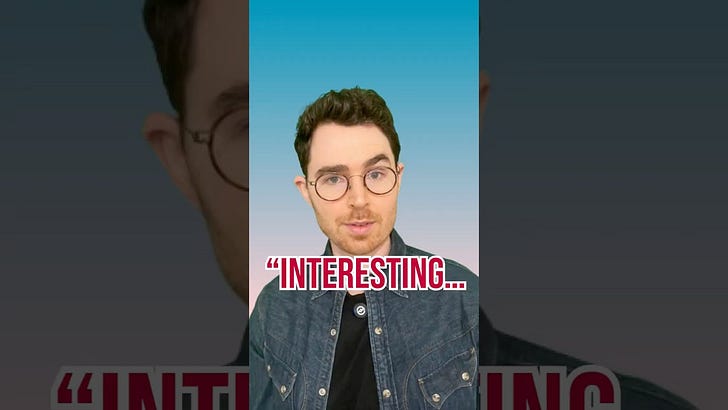
We've all been there. You share an idea, a thought, or even a personal anecdote, and the response you get is a placid, "That's interesting." On the surface, it seems positive, a sign of engagement. But what if we told you that in American English, especially in professional or conversational settings, "interesting" doesn't always carry the positive weight you might assume? Sometimes, it hints at something entirely different. It’s a word where context truly reigns supreme, and understanding its nuances can save you from misinterpreting a polite evasion for genuine enthusiasm.
The Meaning of “Interesting”
The word "interesting" literally means something that arouses curiosity or holds attention. However, its practical usage in spoken English, particularly in American dialects, often extends beyond this dictionary definition. It frequently serves as a neutral placeholder, a polite deferral, or even a subtle expression of skepticism or mild disagreement. It's a verbal pause, a non-committal response that avoids direct criticism or immediate endorsement. The true meaning is almost always embedded in the speaker's tone, facial expression, and the ongoing conversation.
Here are a few scenarios to illustrate its versatile, often veiled, meanings:

Polite Skepticism: In a business meeting, if you propose a new strategy and a colleague responds with, "That's an interesting approach," it might not signify agreement. Instead, it could translate to, "I'm not convinced this will work, but I'm willing to hear more," or "I have reservations, but I'm being polite." It's a signal for you to elaborate and persuade further.
-
Lack of Strong Opinion or Engagement: When you recount a detailed story or describe a complex situation, and the listener simply offers, "Oh, that's interesting," it often means they don't have a strong opinion, are unsure how to respond, or perhaps aren't as engaged as you might hope. It's a way to acknowledge what was said without diving deeper or expressing a specific sentiment.
-
Buying Time: If someone is caught off guard by a question or proposition and needs a moment to formulate a response, "That's interesting" can be a subtle way to buy a few seconds. It allows them to process the information without an awkward silence or an immediate, potentially ill-considered, reply. In this context, it signals, "I'm thinking about that."
Common Mistakes
English learners often fall into the trap of assuming "interesting" is always a positive affirmation. This can lead to misinterpretations and missed cues in conversation.
-
Misinterpreting it as Genuine Enthusiasm: The biggest mistake is assuming that "interesting" always means "great," "wonderful," or "I love it." While it can mean this in some contexts, relying solely on the word itself, especially without considering tone or body language, can lead to misunderstanding a mild dismissal for genuine approval.
-
Overusing it as a Default Response: Some learners might use "interesting" as a go-to response when they don't understand something completely or don't know what else to say. While it's better than silence, it can make conversations feel superficial or signal a lack of deeper engagement to native speakers.
-
Ignoring Context and Non-Verbal Cues: The true meaning of "interesting" is heavily dependent on context. Is the speaker smiling genuinely, or is their expression neutral? Is their tone curious, or flat? Ignoring these crucial non-verbal signals is a common error that prevents a full understanding of what's being communicated.
Conclusion
"Interesting" is a chameleon of a word in American English, capable of conveying everything from genuine curiosity to polite skepticism, and even mild disinterest. Its power lies not in its literal definition, but in the subtle layers of meaning added by context, tone, and the broader conversational dynamic.
To truly master this word, English learners must become astute observers of these nuances. Don't just hear the word; listen to how it's said, when it's said, and what follows it. By paying closer attention, you'll not only avoid miscommunications but also gain a deeper appreciation for the subtle art of English conversation.
Did you find this insight interesting? Let us know in the comments below, and be sure to subscribe to our Substack for more deep dives into the quirks and complexities of English communication.
Want to see these phrases in action? Check out Snackk.me (it’s free!) to get visualized word flashcards.